The bottom line is there are NOT any significant changes from the 2023 test NCLEX plan to the 2026 NCLEX test plan. Nursing students will be studying the same content and using the same critical thinking skills already learned.
Do not let people on social media scare you into thinking that the NCLEX exam has changed drastically, gotten harder or there will be a new way of thinking! The test has NOT CHANGED in any significant way!
I have been going through the NCLEX test plan since 2008 and monitoring for any changes. I also have been going to the yearly NCLEX conference since 2019 to keep posted on any changes.
OVERVIEW of changes:
- passing standard is the same
- categories are the same
- types of questions are the same (see below for details)
- integrated processes are the same
- clinical judgment and case studies questions are the same
- minor changes to statements in the client needs categories, but nothing major to know
- New statement: “Perform care for clients to support unbiased treatment and equal access to care, regardless of culture/ethnicity, sexual orientation, gender identity and/or gender expression”
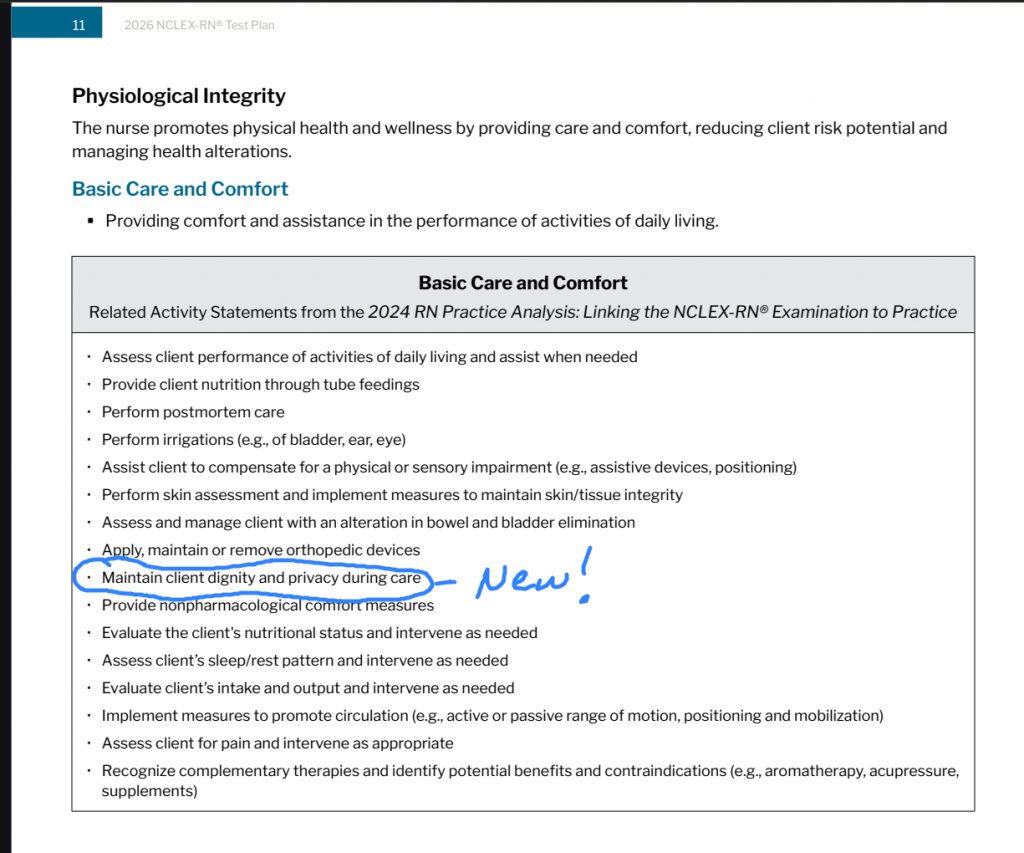
- New statement: “Maintain client dignity and privacy during care”
- Statement revised: “Perform testing within scope of practice (e.g., electrocardiogram, point-of-care testing, fetal monitoring)”
- New statement: “Monitor and maintain internal monitoring devices (e.g., intracranial pressure monitor, intrauterine pressure cathete)r”
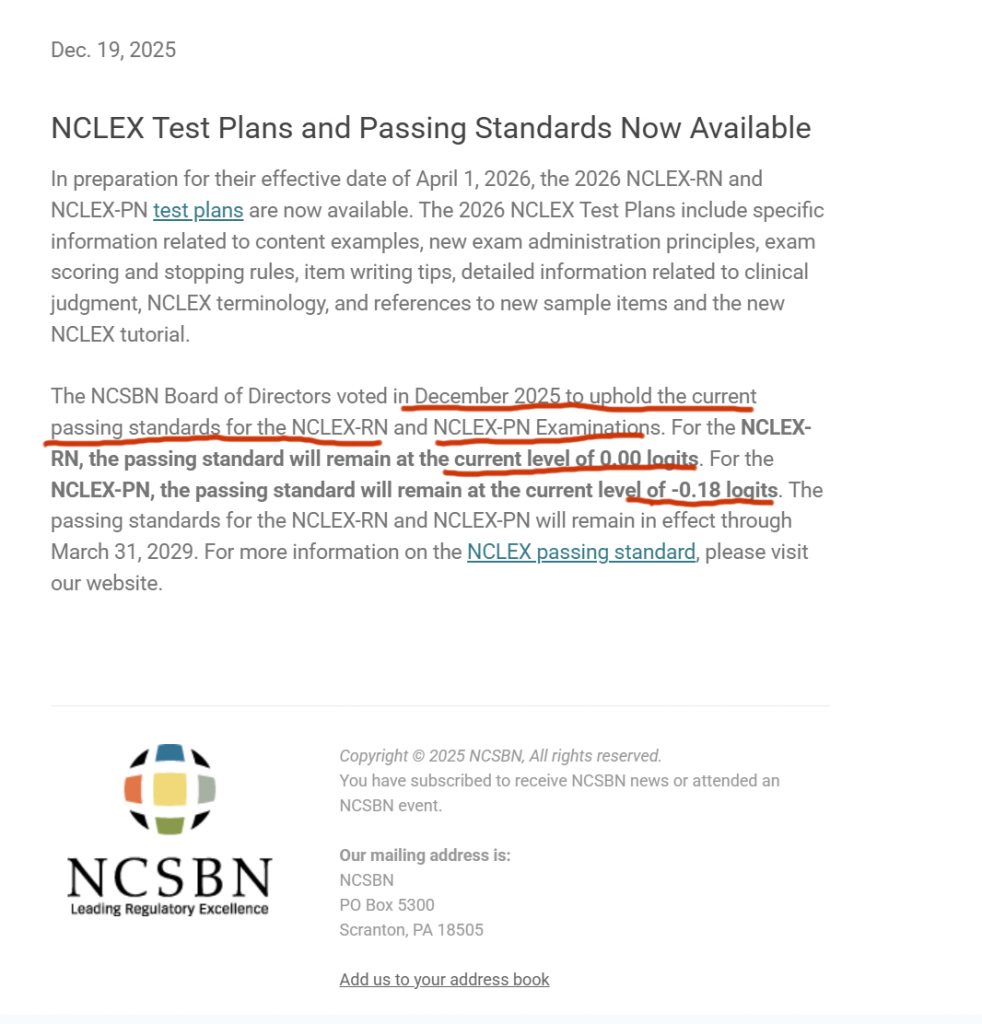
1. The Passing Standard is the SAME
This basically means that the test questions didn’t get any harder or any easier for NCLEX-RN or NCLEX-PN exams. The same level of passing is the same in 2026 as it was in 2023. It’s 0.00 logits for NCLEX-RN and -0.18 logits for NCLEX-PN.
You can see from the image below that this info came directly from an email from NSCBN (the people in charge of the NCLEX). I got the email from them Dec. 19, 2025.
2. The Categories Being Tested on is Exactly the SAME
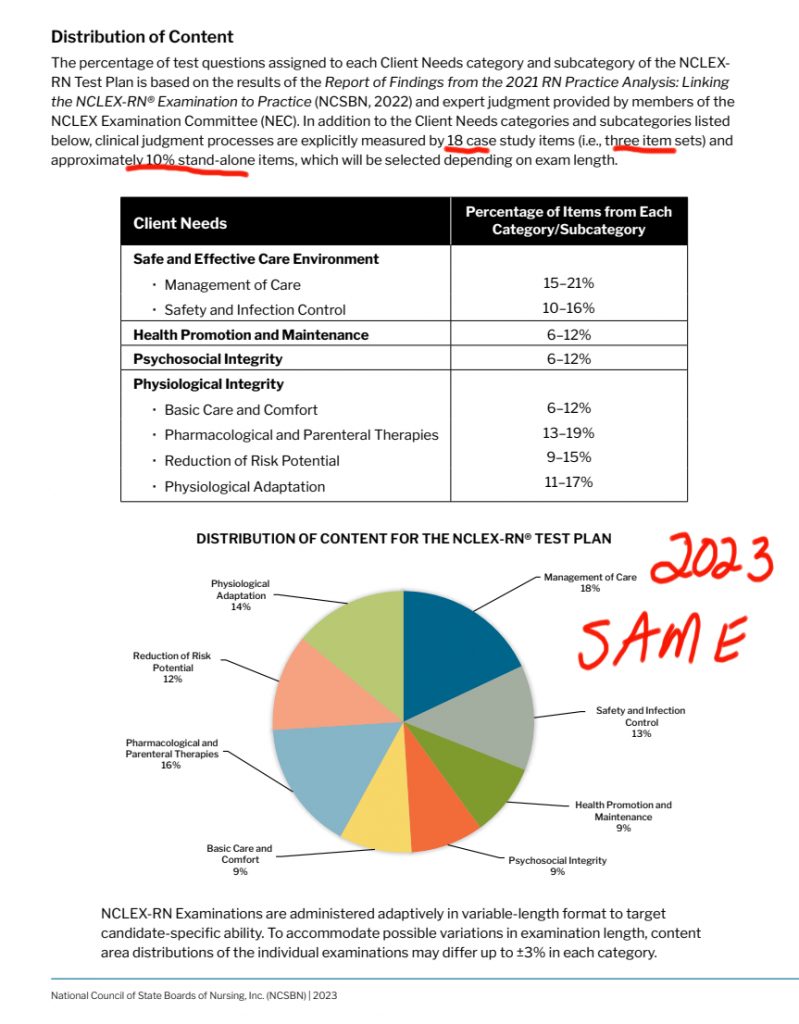
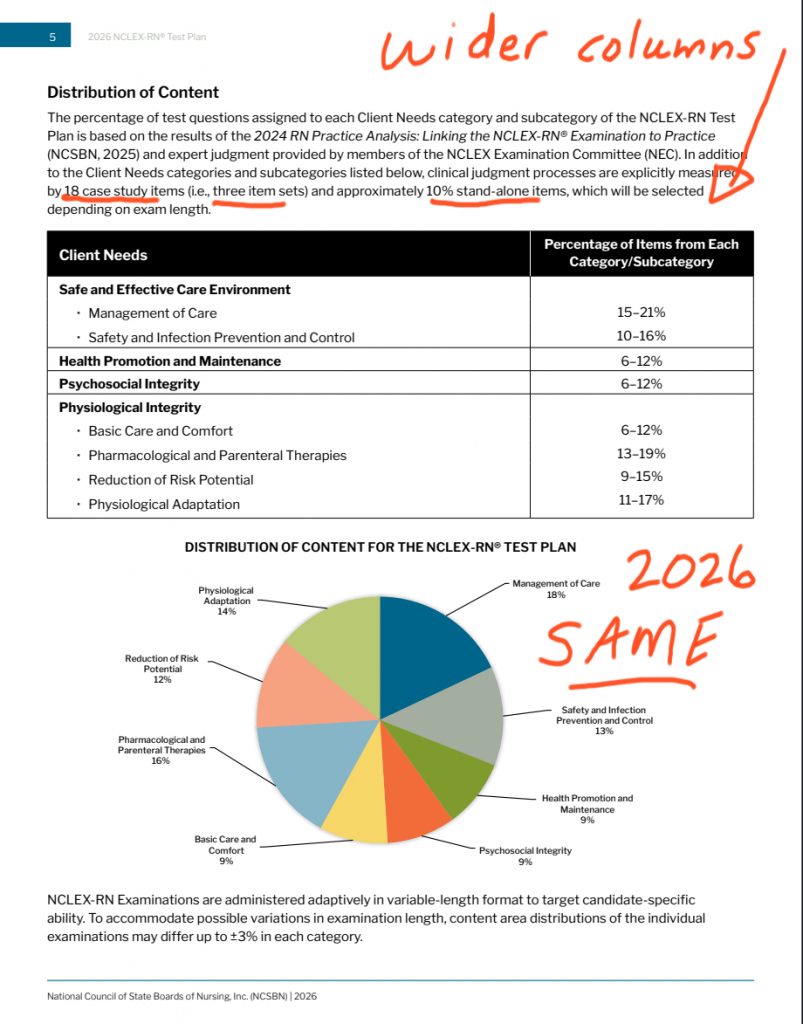
Every 3 years the NCLEX people make any needed updates to the NCLEX test plan. There are 8 categories. There were absolutely no changes to the percentages or category names. You can see from the screenshots below. The 2023 test plan categories are the same as the 2026 test plan categories. The only difference I noticed was they made the column wider for the 2026 test plan. I wouldn’t really consider that a change to the NCLEX test plan though.
2023 test plan
2026 test plan
3. The Types of Questions are the SAME
You can see from the screenshots above that there are “18 case study items (i.e. three item sets) and approximately 10% stand-alone items”.
This translates into three 6-question case studies, some stand-alone case study questions and the rest of the test will be the traditional questions. It’s exactly the same from 2023 to 2026!
However, there are 15 pilot questions that you will get in the first 85 questions that won’t count for your score. In those 15 questions you can get some case study questions. So realistically you could get up to five 6-question case study questions. You just won’t know which questions count. But the NCLEX has always had 15 pilot questions, so that is not new either.
It’s important to note that sometimes you will see questions worded in a way that you’ve never seen before. For example, one year students started seeing questions worded as “What client statement would require follow-up?” This word “follow-up” was something new. And students weren’t exactly sure what the question was asking. Follow-up meant to pick the answer where the client was saying something wrong or something that indicated a complication. But looking for complications isn’t anything new on the NCLEX. It was just that a question was worded a bit differently than what they were used to.
Newly worded questions can pop up at any time. The NCLEX people don’t tell us how they word the questions.
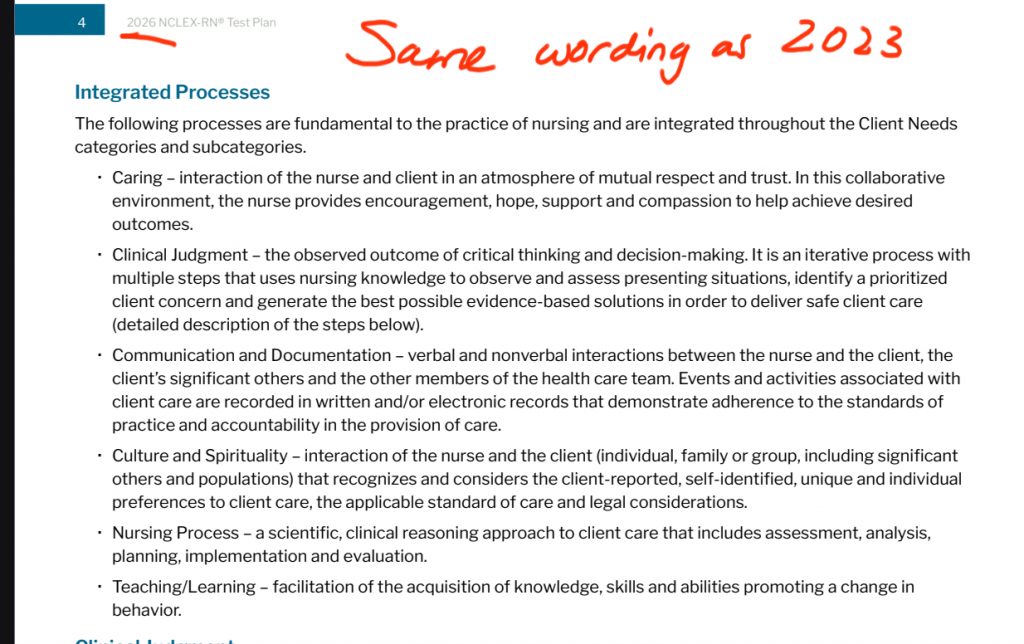
4. The “Integrated Processes” are the SAME
There are 6 processes that are fundamental to nursing and is included throughout the NCLEX exam. They include:
- Caring
- Clinical Judgement
- Communication and Documentation
- Culture and Spirituality
- Nursing Process
- Teaching/Learning
These processes where the same ones that were in the 2023 NCLEX test plan. NOTHING CHANGED.
5. Clinical Judgment is the SAME
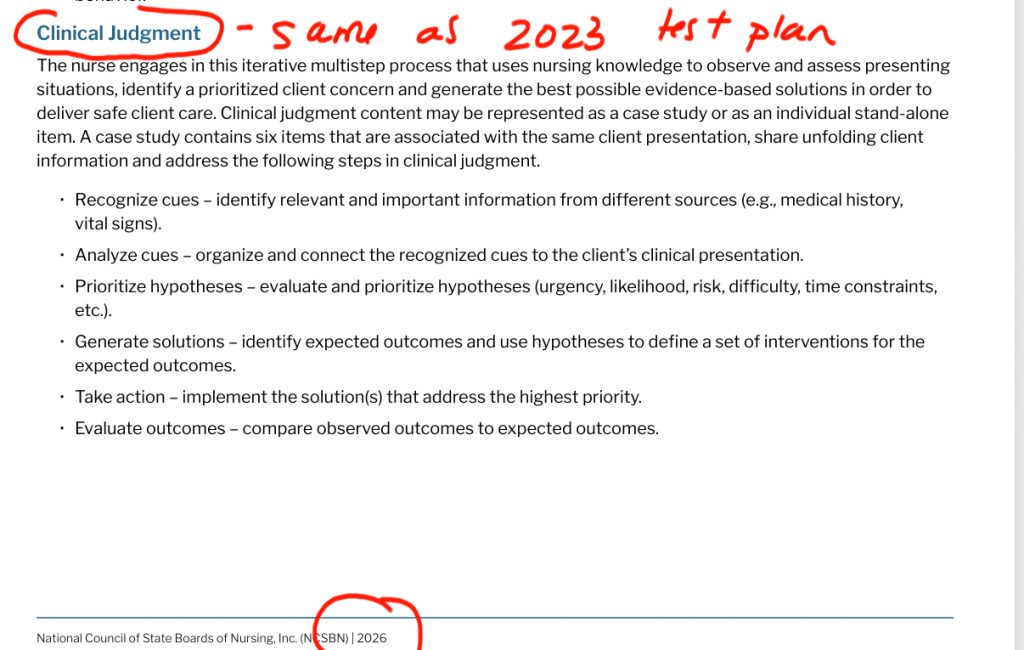
Clinical judgment are the steps you take when you are doing a 6-question case study or a stand-alone case study. This 2026 NCLEX test plan and 2023 NCLEX test plan are identical for this process. The clinical judgment was a new change in 2023 when they introduced the case studies. This was a process that was 10 years in the making! So I’m not surprised that there are NO changes to this.
6. The Nursing Content being tested on within the Client Needs Categories is almost exactly the SAME
I compared the 2023 nclex test plan to the 2026 test plan to see if the content being tested on is the same. It’s basically the same with some minor additions or minor changes. I
As I go through the 8 sections, I will show you the additions or changes I found:
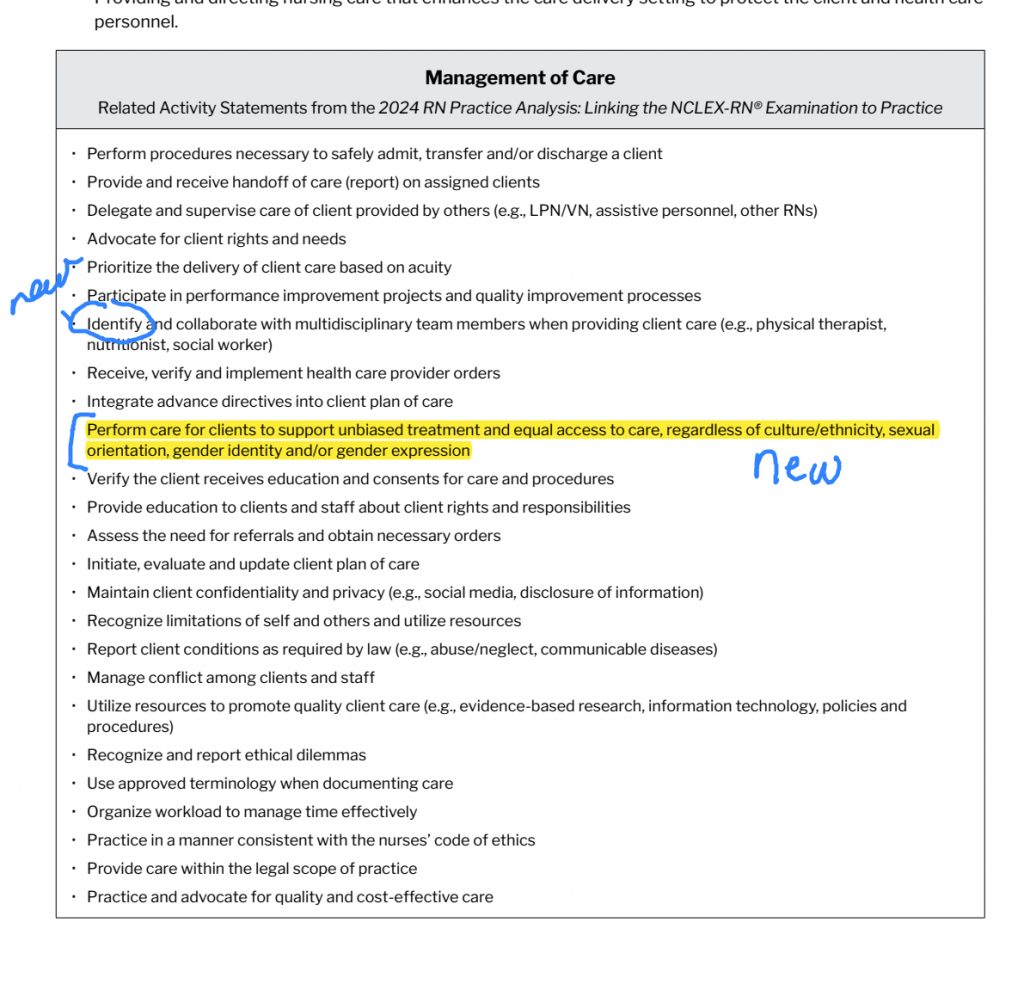
A. Management of Care ~18%
Management of care included a new statement about “performing unbiased care…”. This concept is definitely not new and was basically already covered in the psychosocial section of the test plan where it mentions to “provide culturally appropriate care”. In addition, it’s basically already covered in the Integrated Processes of “Caring” which mentions “mutual respect”.
Another change is that management of care added the word “Identify” to the following statement about multidisciplinary collaboration. That’s not really a big change.
B. Safety and Infection Control ~13%
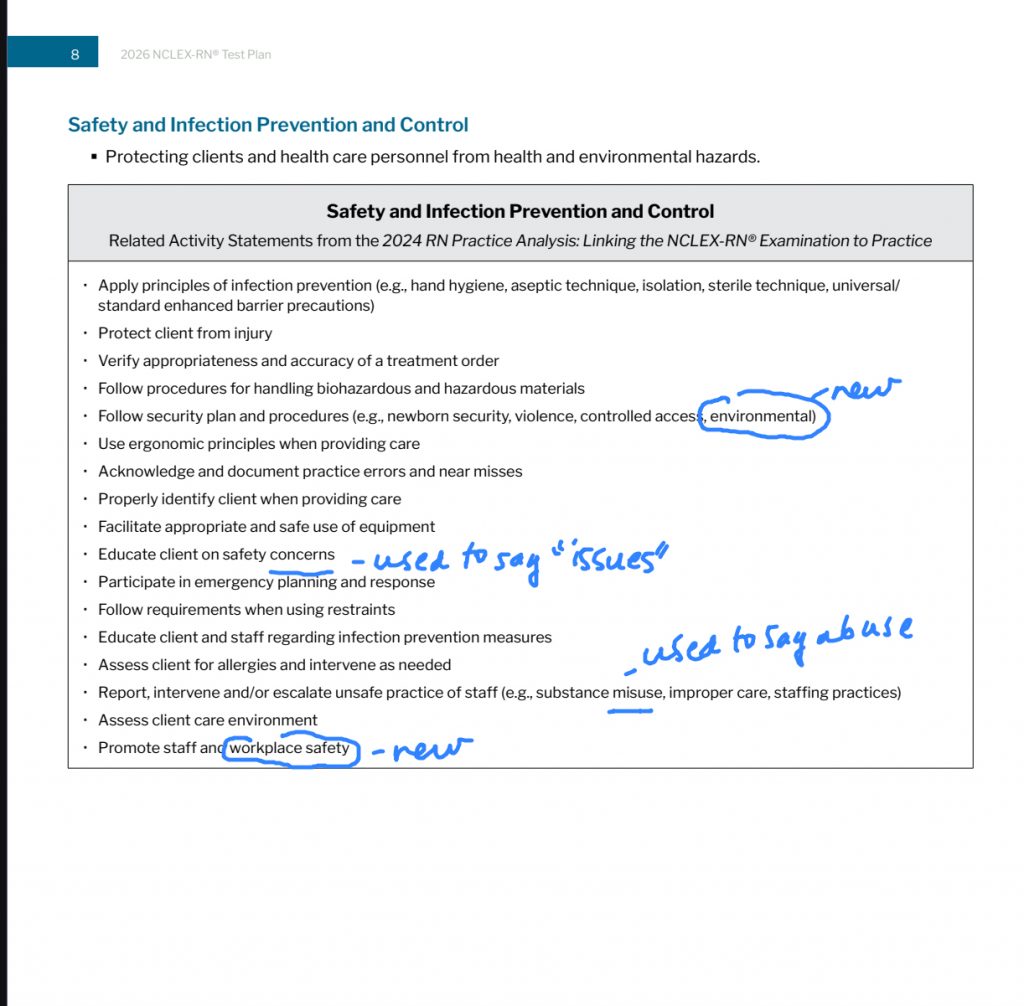
Safety and Infection Control added the word “environmental” to the statement about following the security plan. The bottom line is to follow the security plan, which is not new.
Safety and Infection Control changed the word “concerns” to say “issues”, regarding safety issues. That’s not really a change since both words basically mean the same thing for our purposes of passing the NCLEX. Safety issues vs. Safety concerns. Sounds the same to me.
Safety and Infection Control changed the word “abuse” to now say “misuse”, regarding unsafe practice of staff. Misuse and abuse basically mean the same thing for our purposes of passing the NCLEX.
Safety and Infection Control added a word to an old statement: “Promote staff and workplace safety“. Basically, all the statements in the Safety and Infection Control section promote workplace safety, so that’s not really new either. However, I do like that they added “workplace safety.”
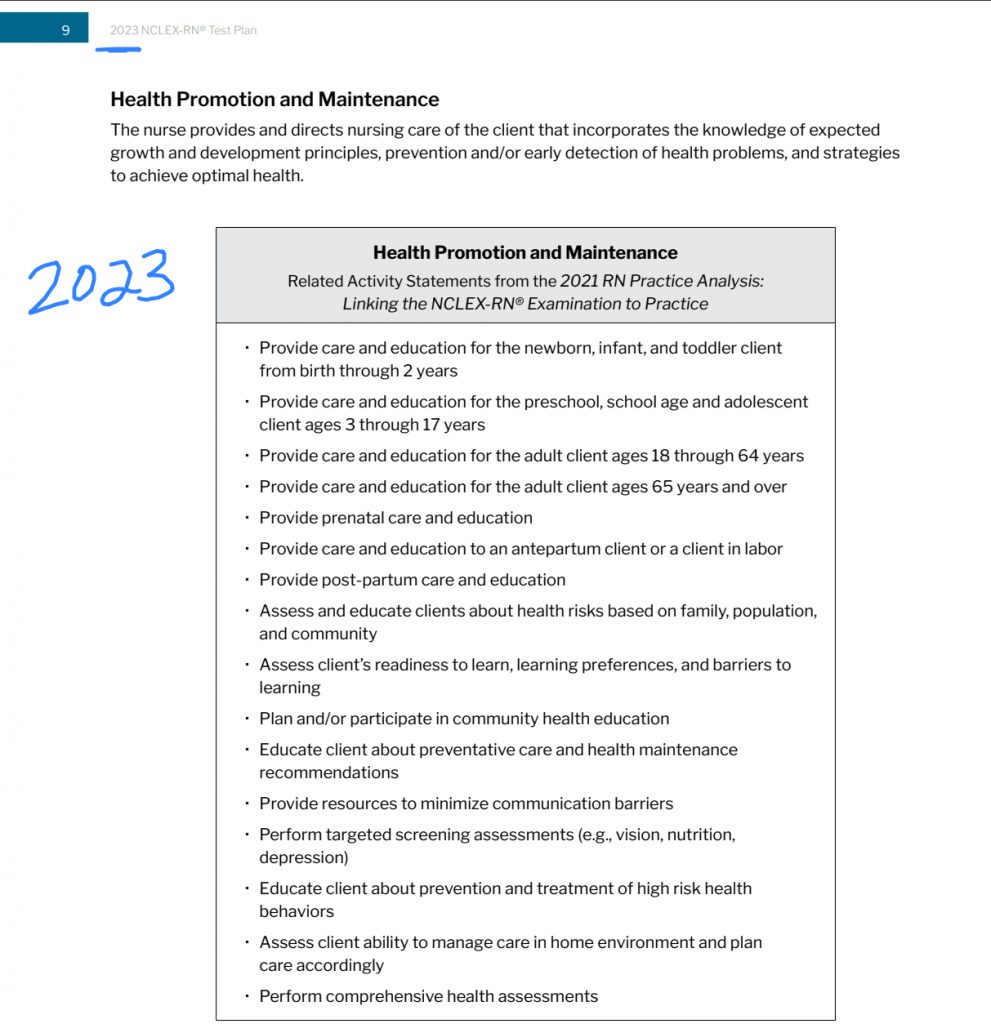
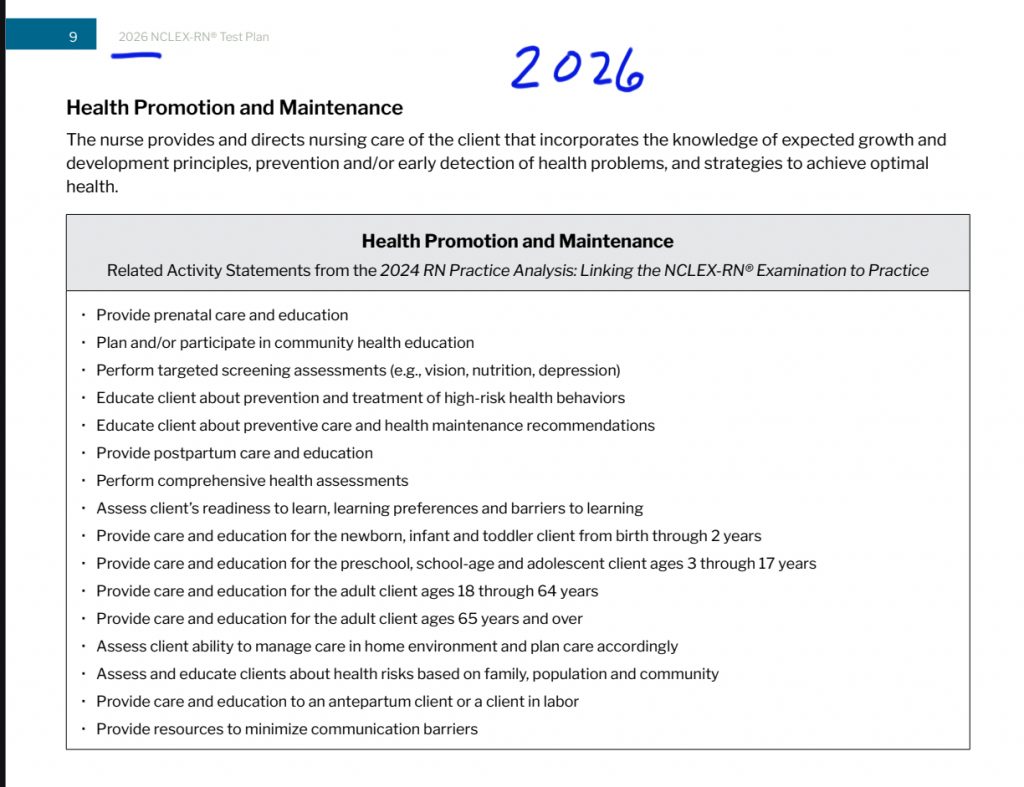
C. Health Promotion and Maintenance ~9%
There were absolutely no changes for this section except they made the 2026 column wider. There were no newly added statements and no changes of the wording. You can see for yourself in both the 2023 NCLEX test plan and the 2026 NCLEX test plan.
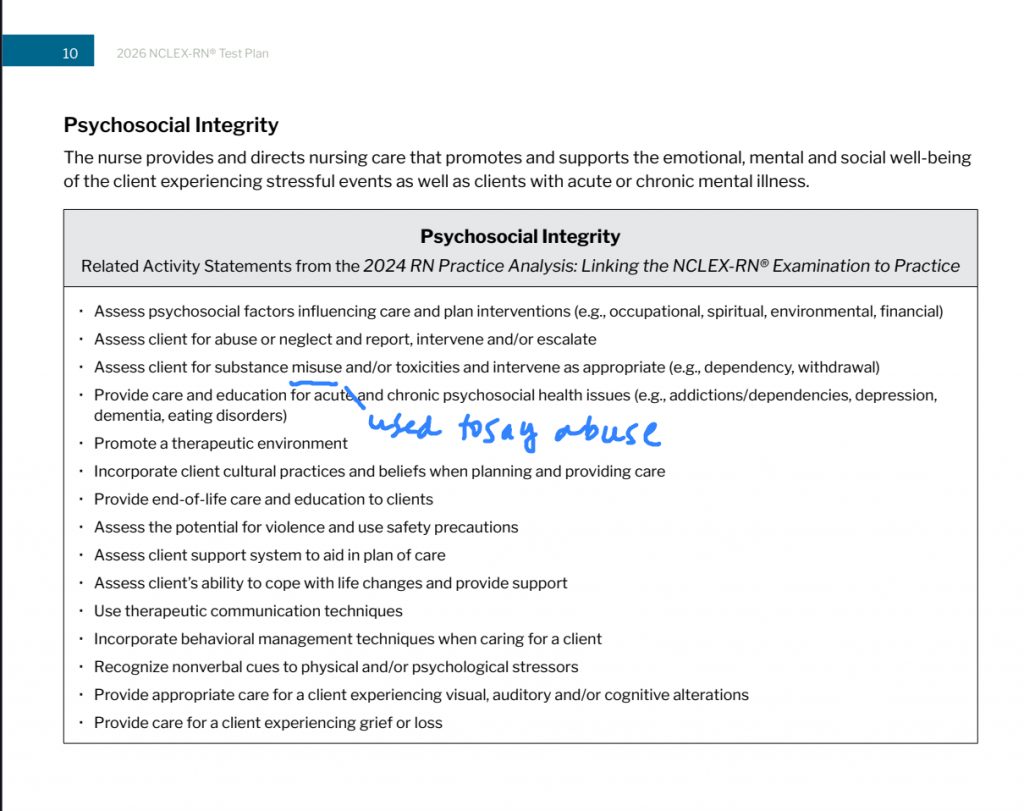
D. Psychosocial Integrity ~9%
Psychosocial Integrity changed the word “abuse” to “misuse”, regarding substance abuse. Once again for our purposes of passing the NCLEX those two words mean the same thing. Substance misuse or substance abuse? Sounds the same to me!
E. Basic Care and Comfort ~9%
Basic Care and Comfort added a new client statement: “Maintain client dignity and privacy during care”. This is an interesting statement, since I can’t believe it hasn’t been in every single test plan. Don’t we always maintain client dignity and privacy during care? I think that it was a good addition. However, as nursing students and nursing instructors we sort of already knew this. I wouldn’t call it a major change to the nursing content.
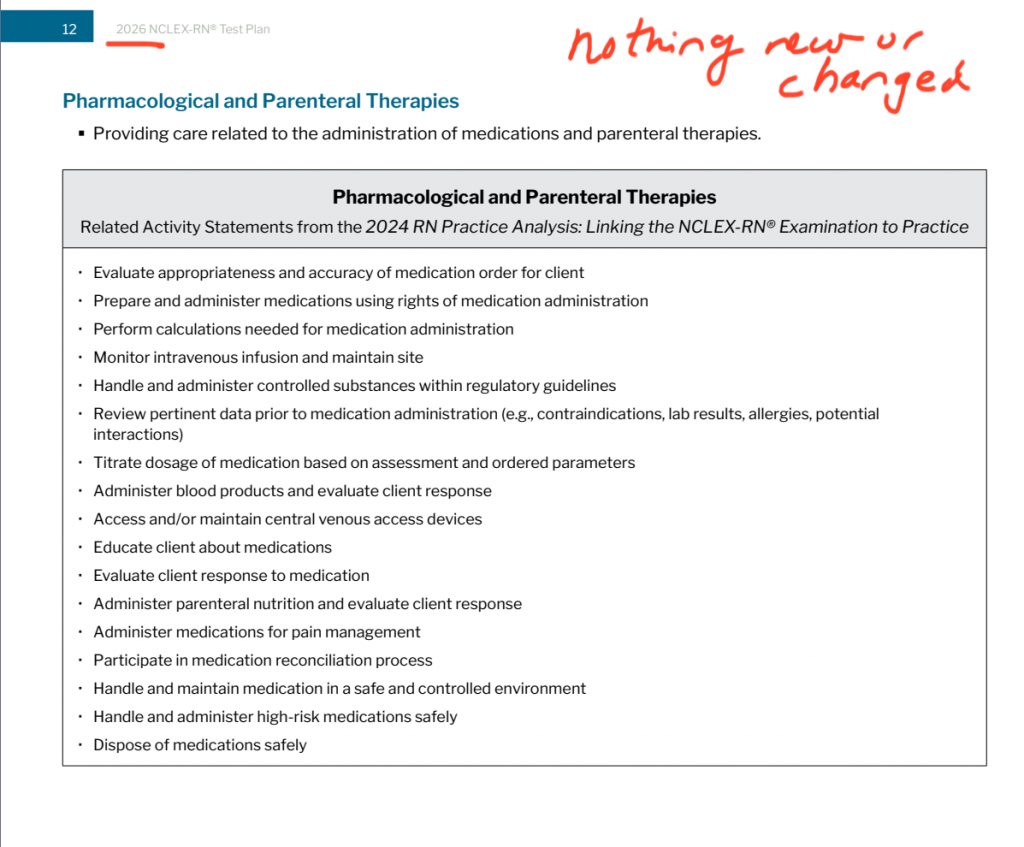
F. Pharmacological and Parenteral Therapies ~16%
There were absolutely no new changes except the column got wider.
G. Reduction of Risk Potential ~12%
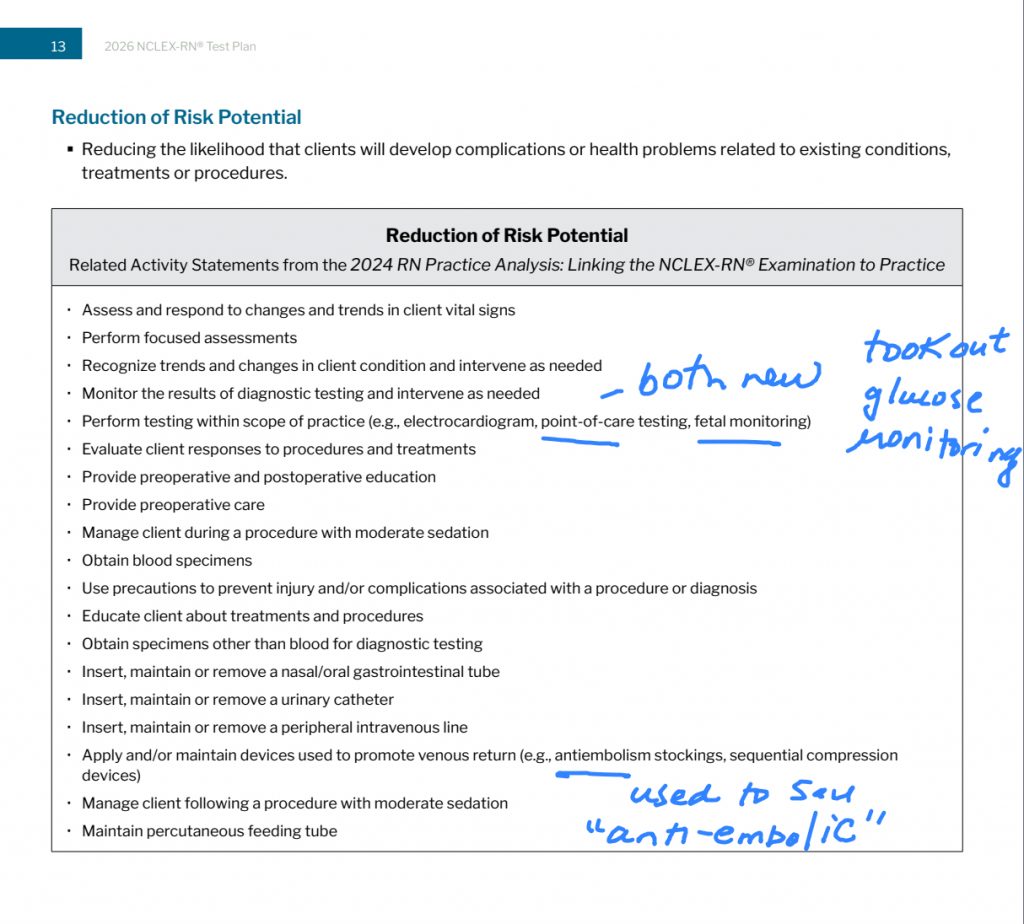
Reduction of Risk Potential had two changes that had to do with the wording, but not the actual content.
Reduction of risk potential took out the word “glucose monitoring” and changed it to “point-of-care testing”. They also added “fetal monitoring”. Point-of-care testing just means to get a sample of the client’s blood or secretions at the bedside. This is not new. We already knew to do this. Also, fetal monitoring is something you already review in nursing school. Remember VEAL CHOP? That is what fetal monitoring includes.
Another change to Reduction of Risk Potential is they changed the word “anti-embolic stockings” to “antiembolism stockings”. That’s the same thing.
H. Physiological Adaptation ~14%
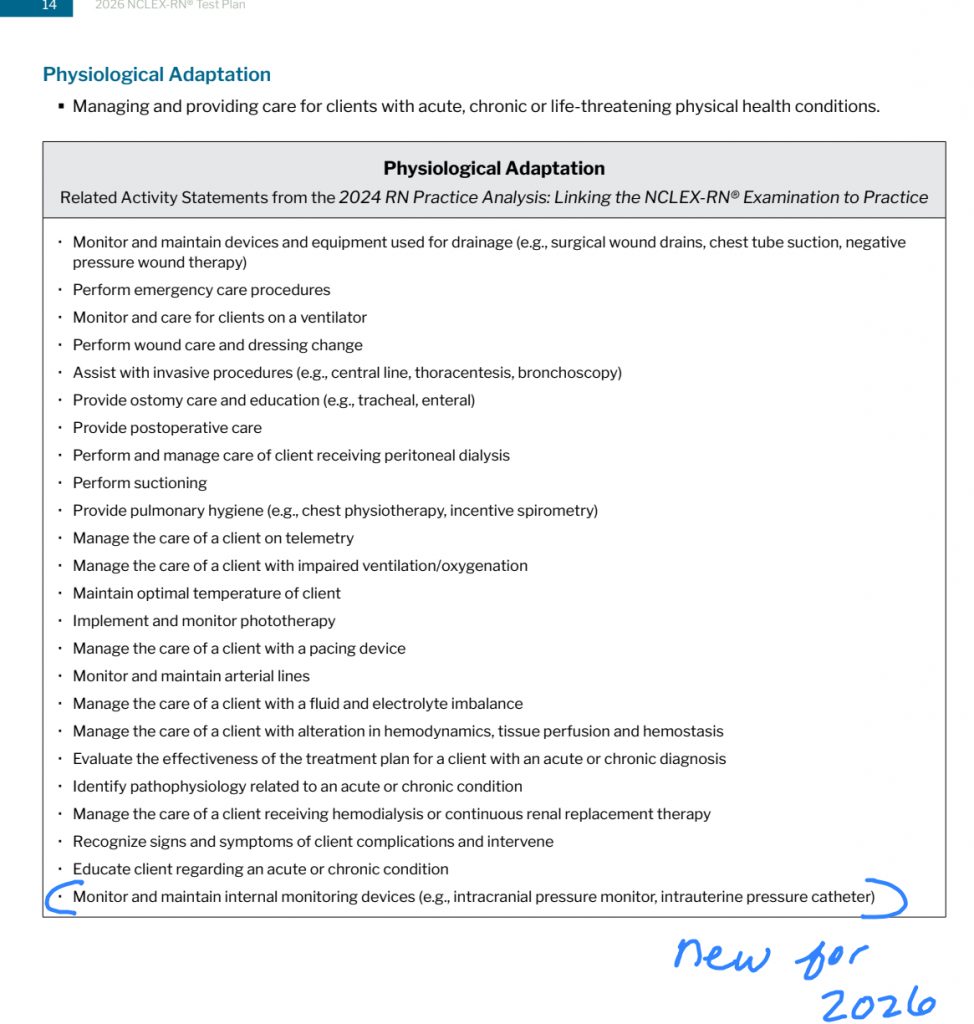
Physiological Adaptation had one added statement to the new 2026 NCLEX Test Plan: “Monitor and maintain internal monitor devices (e.g. intracranial pressure monitor, intrauterine pressure catheter)”
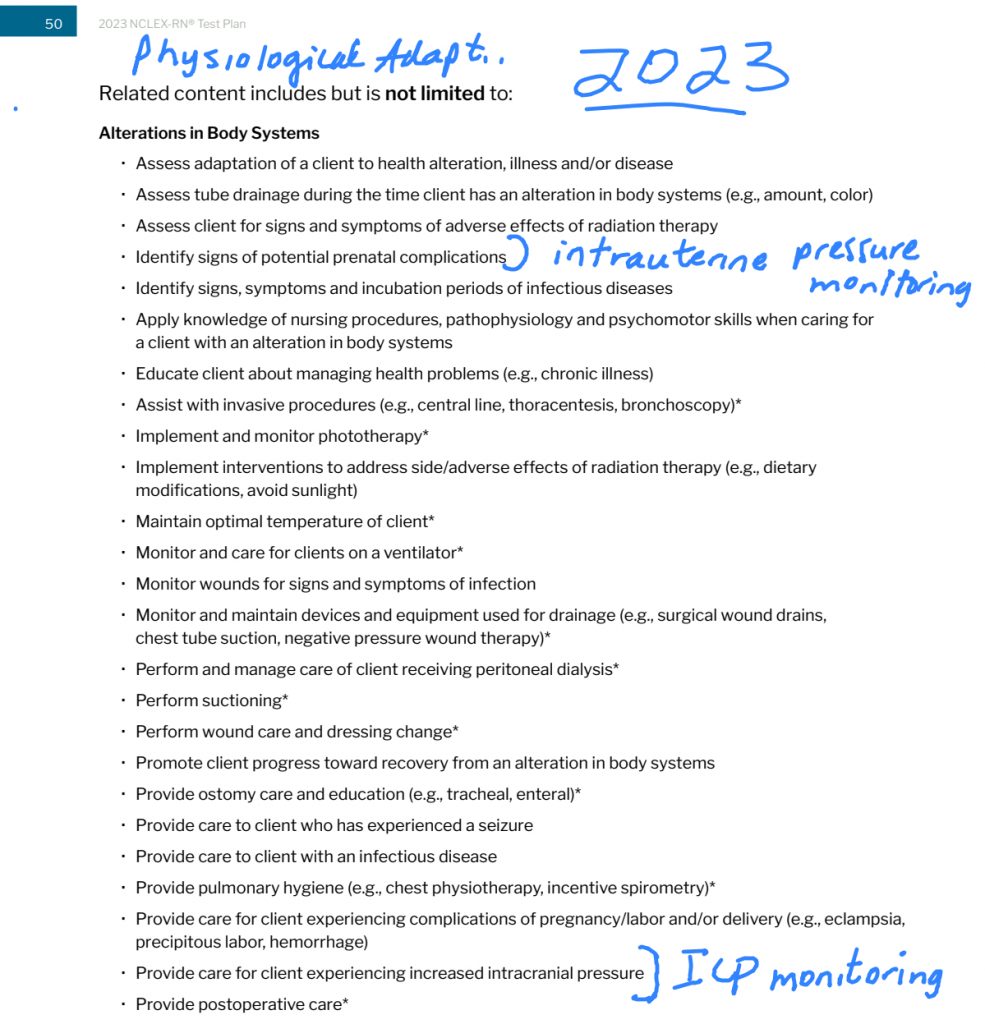
This new statement gives a bit more detailed information on what the NCLEX people want nursing students to know. But in reality, we already knew to monitor ICP and intrauterine pressure. Because in the 2023 test plan it said:
“Provide care for client experiencing increased intracranial pressure”. I’m going to argue that in order to provide care for increased ICP, I need to know how to monitor for it too. However, I like they put that statement in the new test plan because now I know for sure to teach my nursing students the basics of monitoring ICP.
“Identify signs of potential prenatal complications”. Part of complications is monitoring for intrauterine contractions. Remember the mnemonic VEAL CHOP? That’s intrauterine pressure catheter monitoring.
What this Means for Nursing Students
Don’t let people scare you into thinking the NCLEX has changed. It has so few changes that in reality it’s the same test as it was in 2023. Like I mentioned before, you may see a newly worded type of question, but you can still use your content and your critical thinking skills to answer it!
You can also still use your favorite content review course to review content. And you can still use your favorite Q-bank to do NCLEX-style questions.
I can’t even imagine a student going through the test plan on their own and trying to figure out what to study. A lot of my nursing students use my Nugget Pages book to review the content. I even have a list below to show you what is covered and what page number to go to in the Nugget Book to review.

However, you don’t need to use my content review. Many of the bigger NCLEX prep companies cover the same topics, but just in a different style. Many offer a free account to try them out. That’s always a good option if you’re not sure which one to use.
I hope that helps!
And remember, I’m a private tutor. If you are interested in tutoring, you can submit your info to get on my waitlist HERE.
Thank you!

